
28 mm tethered cap samples: what should you trial on your bottle?
For a PCO 1881 tethered cap, fitting onto the neck is only the starting point. Assess opening, pouring and reclosure using the actual bottle, current specification and a comparable trial record.
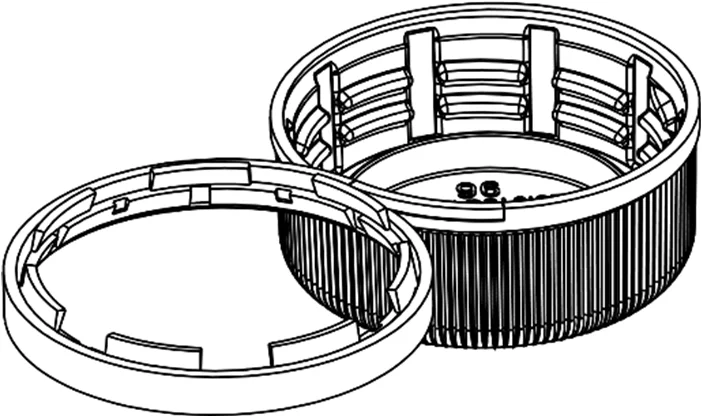
Identify the cap and bottle before comparing samples
A tethered sample that fits onto a bottle is not, by that fact alone, ready for a production decision. The buyer needs to understand how it opens on the intended pack, where the cap sits during use and how it closes again. Do not transfer a result from a different bottle without assessment.
Peksan 028.016CTP1TB is an HDPE tethered cap for 28 mm PCO 1881 PET bottles. Record specification KK.UB-65, Rev01 dated 24 March 2026, the complete sample code and the bottle-neck drawing revision together. A shared nominal diameter does not establish interchangeability between closures.
Prepare a comparable sample set
Identify the bottle, filled product and fill level, and record sample preparation and application conditions. Before the trial, follow this product's instruction to condition it at the application temperature for at least 24 hours. Mark hand-applied and line-applied samples separately: a result from one does not approve the other for production.
Observe the sequence from first opening to pouring
Observe first opening separately from moving the cap into its use position. Without cutting the attachment, record whether the cap obstructs the bottle opening, where it moves during pouring and when an extra hand adjustment is needed. A short image sequence linked to the sample identifier explains more than a simple “easy” or “difficult” rating.
DIN's 2024 study treats retention and everyday handling as separate concerns. Do not treat it as validation of this Peksan product code. Base your observation record on your bottle, intended use and the actual sample being compared.
Separate reclosure from seal performance
During intended reclosure, record the attachment's position, how the threads engage and the closing movement. A cap that looks closed does not prove a seal. Define separate acceptance criteria for leakage checks, capping settings and line behaviour, and record the number of opening-and-closing cycles actually tried. This guide supplies no universal angle, force or cycle limit.
Build the evidence for an order decision
Keep the product code and specification revision, bottle drawing, sample identifier, filling details, preparation and capping conditions, observed issue and decision owner in one record. Request applicable compliance documents separately for the destination market and application; this practical trial record is not a certificate. When requesting samples or a quotation from Peksan, provide your bottle and the specific handling question that remains open.
Sources and related guides
- Peksan · 028.016CTP1TB
- Peksan · KK.UB-65 · Rev01 · 24.03.2026
- European Commission · Plastic caps
- DIN · 2024
- Preparing caps for use: how should you track the conditioning instructions?
- Application and removal torque: when can two measurement results be compared?
- Cap sample approved: which records should be completed before a production order?