
How should bottle, water-container and jar handles be assessed?
Assess carrying and attachment together
A handle helps users grip and carry a filled package. Designs may engage around a neck, attach at the side or work together with a closure. Not every PET bottle handle is side-mounted; classification depends on its actual attachment arrangement. A handle does not independently guarantee that a package cannot slip, fall or exceed its carrying capacity.
Assess filled weight, grip area, container geometry and user movements together. Volume in litres is insufficient. Different products in containers of the same volume can have different filled weights, so tests should represent the actual package.
Read catalogue dimensions carefully
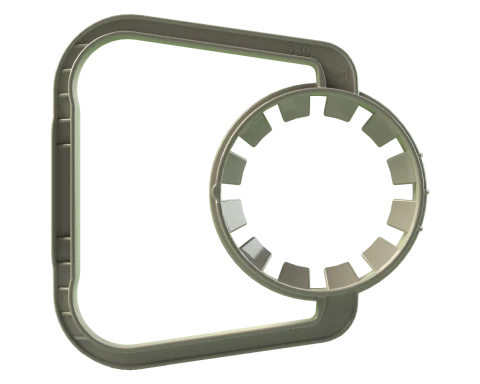
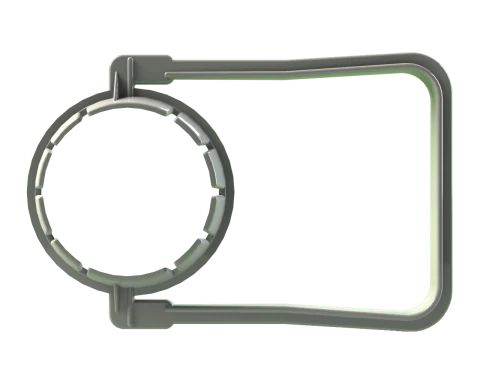
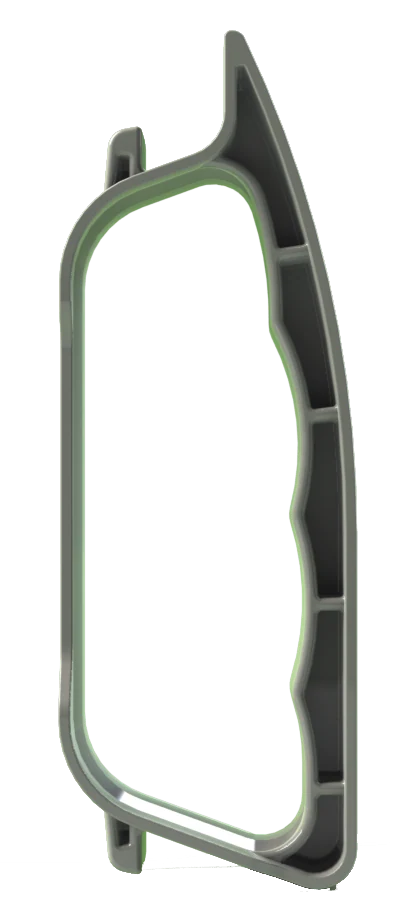
Peksan identifies 038.088HSP10N as a 38 mm PET bottle handle and 055.137HSP10N as a 55 mm PET water-container handle. The record for 040.115HSP10N describes a side-mounted PET bottle handle. These examples illustrate different attachment arrangements. Initial product-code digits should not universally be interpreted as the same type of diameter or as a load rating.
Compare handle and container seating surfaces, tolerances and assembly methods. A sample that can be attached by hand is not automatically suitable for an automated assembly line. Do not assume that an earlier setup remains valid after changing components.
Handles on jar closures
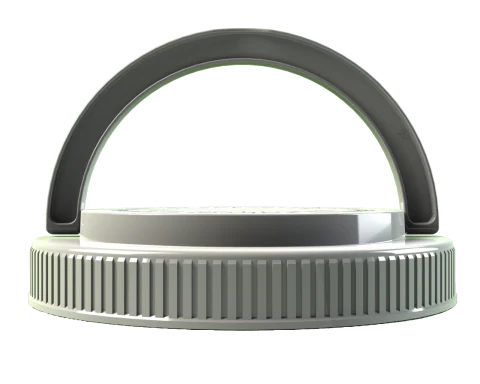
An assembled handle and an integral handle are different constructions. Peksan lists 110.023CTP21L as a PET jar closure with an assembled handle and 110.028CTP10L as one with an integral handle. PET jar does not identify the cap material. Assess the handle according to its defined function rather than treating it simply as an opening knob.
When carrying the jar, the closure attachment and sealing arrangement must function together. Inspecting only the handle or only the cap cannot establish overall suitability.
Sample and use assessment
Plan assembly, lifting, carrying and opening trials with the actual filled package. Define methods, conditions and acceptance criteria beforehand. Do not state a kilogram limit without technical evidence or assume that a damaged handle remains suitable for use.
Include attachment drawings, product codes, filled weight and assembly method in the enquiry. Discuss reassessment needs when requesting a new design, colour or material.
Related products
Related guides
Glass bottle caps and stoppers: selection and design
How do you select flip-top and snap-on closures?
How are plastic closure design and production planned?
How should closure prices and production costs be assessed?
How should closure materials, quality and recycling be assessed?
How should drum and water-container closures be selected?
What is a protective cover for a food can, and how is it selected?
How are plastic bottle production and closure fit assessed?
Empty bottle and container prices: requesting a 1 or 5 litre quotation
Plastic bottle types: assessing PET, PE and PS
Cosmetic closures: disc-top, roll-on and powder formats
Are foil seals, tamper evidence and child resistance the same?